We carry families with babies and young children to all six London airports every week. We have loaded pushchairs and travel systems at 3am. We have helped parents fit a newborn baby car seat with a sleeping infant inside. We have dealt with two toddlers and three cases and a folding buggy at Stansted at midnight. The detail in this guide — the NHS timing advice, the UK law nuance, what ISOFIX actually means in a taxi, which brand makes the best baby car seat UK for an airport transfer — comes from real operational experience. Not assembled from other websites, several of which misstate the taxi exemption and the timing guidance.
Gatwick Taxi Transfer holds a TfL Private Hire Operator licence. All drivers DBS checked. Rated 4.8/5 on Trustpilot (40 reviews). [Law: gov.uk/child-car-seats-the-rules · Timing: nhs.uk · Standards: ECE R44/04, i-Size R129 — verified June 2026]
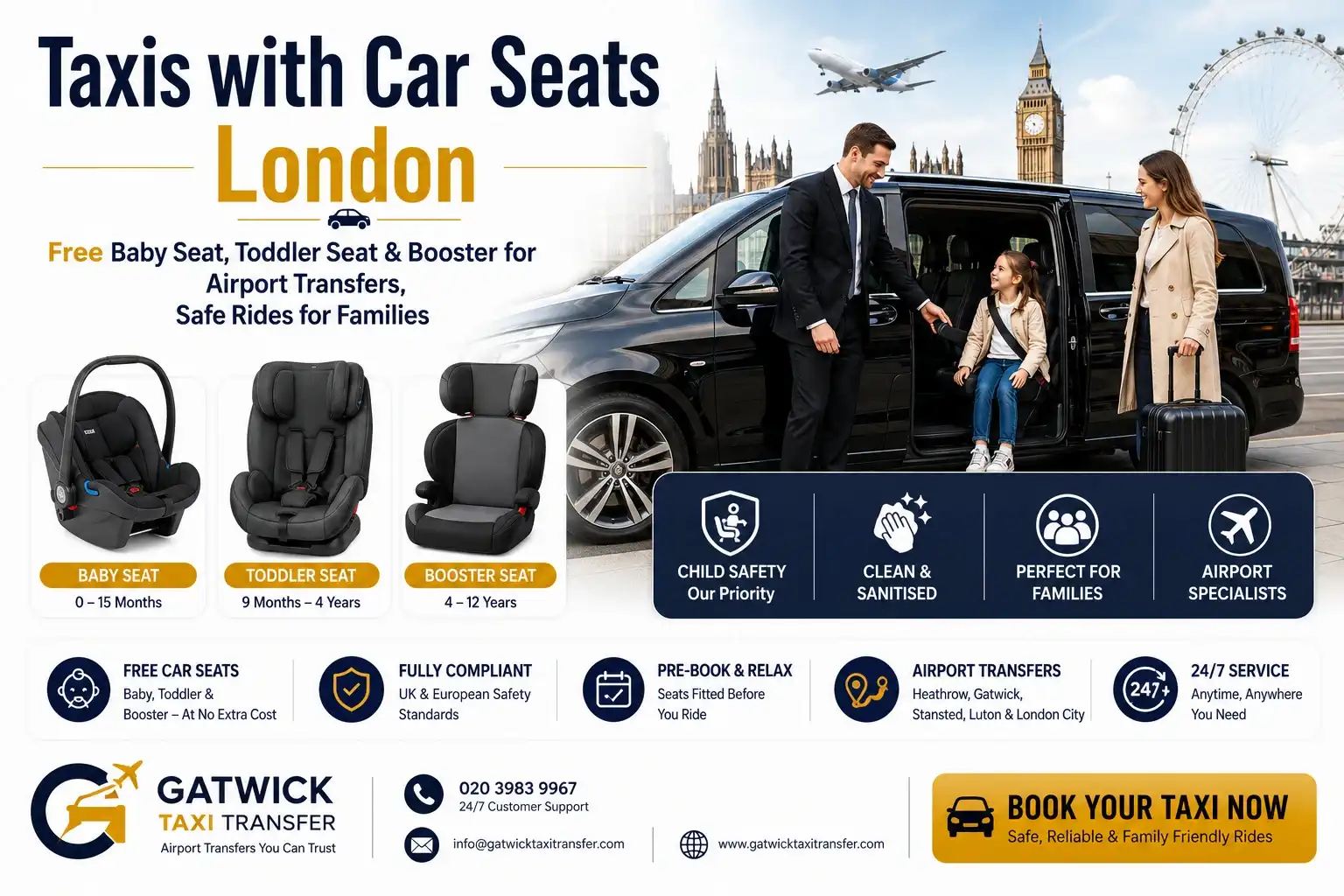
Is the baby car seat free? Yes — completely free with Gatwick Taxi Transfer for every airport transfer, for every age. This covers newborn baby car seats, toddler seats and boosters. No extra charge appears at checkout and no driver asks for payment on the day. Compare this to Carrot Cars, which charges £18 for a child seat and £6 for a booster — that is £24 extra on top of the fare. With us, zero. The only thing you need to do is tell us your child's age in months when you book.
Which seat does my child need? Three stages. Stage one — newborn to 15 months: a rear-facing infant seat (also called a newborn baby car seat or baby carrier car seat) where the baby faces the back of the car. Stage two — 15 months to 4 years: a forward-facing toddler seat with a harness across the chest. Stage three — 4 to 12 years: a high-backed booster, also called the car baby seat for older children, that lifts them so the adult seatbelt sits across the shoulder correctly instead of the neck. Tell us the age and we select the right one — you do not need to know the group number.
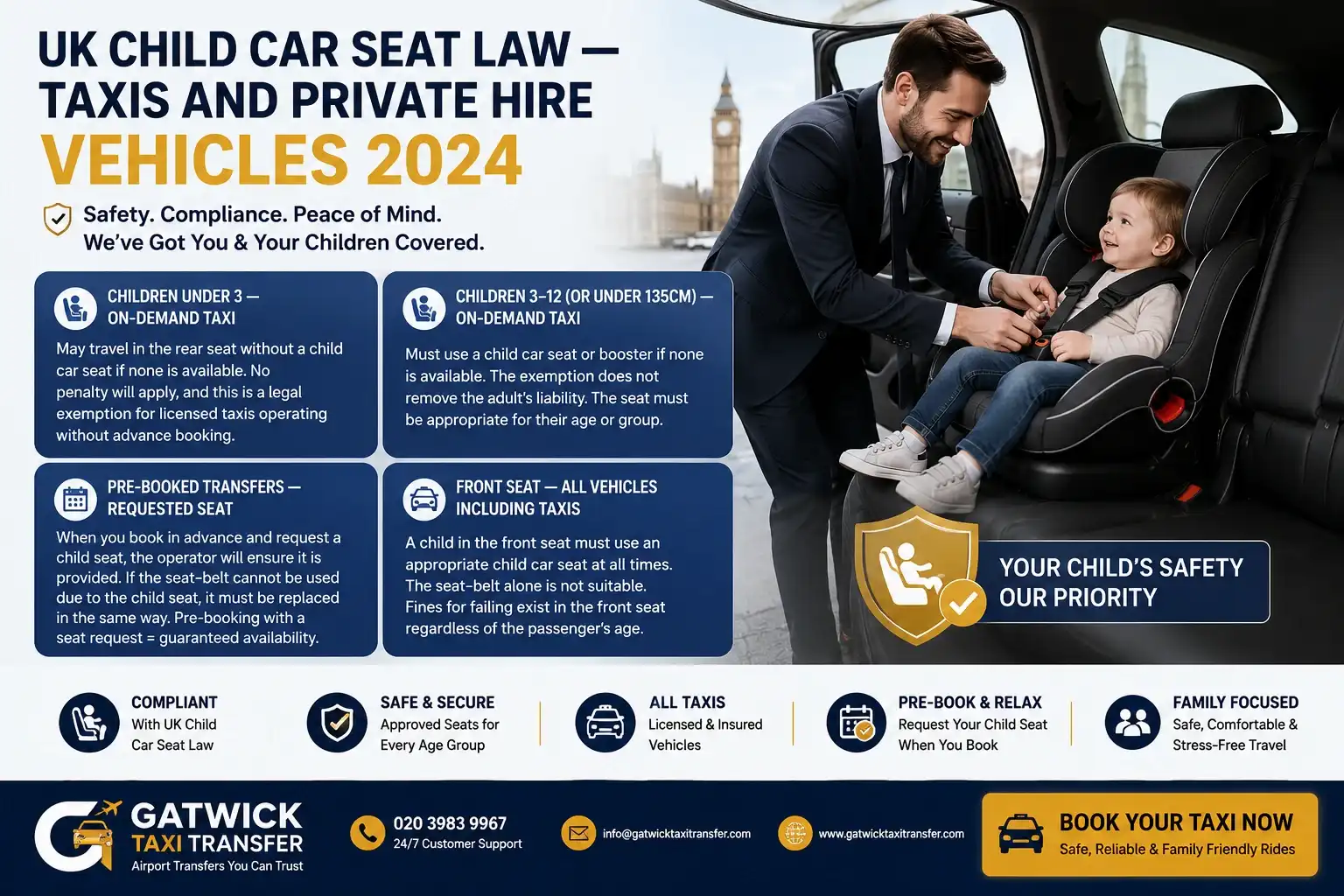
Is a baby in taxi without car seat UK legal? UK law is more complicated than most websites make it sound. On-demand taxis have a legal exemption — if no seat is available, children under 3 can travel in the rear without one. But when you pre-book a private hire transfer and specifically ask for a seat, the provider must supply it. With Gatwick Taxi Transfer you always pre-book, always request the seat, and the seat is always confirmed and pre-installed. The taxi exemption never applies to our bookings.
How long can a baby be in a car seat? The NHS says maximum 30 minutes for very young babies — especially newborns. A semi-upright position puts strain on a baby's airway if they slump forward, which is the risk. For older babies (6 months plus), up to 90 minutes is generally safe, with a break recommended after. How long can baby stay in car seat for a toddler: the standard 2-hour guidance applies. Most London airport transfers take 20 to 75 minutes — usually within safe limits. For longer journeys, the driver can stop on request.
Baby in Taxi Without Car Seat UK — The Real Law, Explained Simply
Most websites about baby car seats in taxis either overstate the law ("all children under 12 must use a seat in every taxi") or understate it ("taxis are completely exempt"). Neither is fully accurate. Here is the actual position, written in plain English, sourced directly from gov.uk/child-car-seats-the-rules.
Two different scenarios — and why they matter
Picture two different situations. Situation one: you are in London on a rainy evening and you hail a random minicab on an app. You have an 18-month-old with you and no baby car seat in your bag. The driver does not have one either. UK law says this is legal. The child can sit in the rear seat without a seat for baby. This is the taxi exemption — it exists because on-demand taxis operate in conditions where neither driver nor passenger can always have the right baby car seat available at that precise moment.
Situation two: you book an airport transfer four days before your flight to Heathrow. You tick the box that says "I need a rear-facing infant seat for a 6-month-old." Now you have a pre-booked private hire vehicle with a specific car seat request on record. In this case, the provider is expected to supply the correct baby car seat. The on-demand exemption does not apply in the same way when a seat has been specifically requested in advance and confirmed.
Gatwick Taxi Transfer operates exclusively in situation two. Every family booking is pre-booked. Every child seat request is confirmed and recorded. The correct baby car seat is specified by age at booking and fitted before the driver departs to collect you. The taxi exemption never applies to any of our bookings.
Can you put a baby seat in the front of a car UK — and should you?
Parents ask this more often than you might expect, especially in taxis where the back seat feels cramped with luggage. The answer is yes for forward-facing seats — a child seat facing forward can go in the front passenger seat with no extra requirements. But for a rear-facing baby car seat, there is one non-negotiable rule: the passenger airbag must be completely switched off first.
Why? Imagine a frontal collision. The passenger airbag fires from the dashboard at very high speed — it is designed to protect an adult sitting upright. A rear-facing baby car seat sits with its back facing the dashboard. When the airbag fires into the back of the seat, it drives the seat (and the baby inside it) directly forward with enormous force. This is one of the most dangerous situations in a child car seat crash. Many cars have a key-operated switch or electronic setting to deactivate the front airbag — if yours does not have this, a rear-facing seat cannot go in the front. For all Gatwick Taxi Transfer airport transfers, baby car seats always go in the rear seats. This is both the safest arrangement and the most practical — rear seats have more space, the baby is further from the dashboard, and the driver has easier access to the boot.
How Long Can a Baby Be in a Car Seat — NHS Guidance, Simply Explained
This is one of the most searched questions for parents and it is directly relevant to airport transfers. Car seats are not designed for babies to sleep in for long periods. They are designed for travel. The semi-upright position in any infant seat can cause a young baby's head to fall forward if they fall asleep — this compresses the airway and can reduce the amount of oxygen the baby gets. For newborns, whose neck muscles are not yet strong enough to hold their head up reliably, this risk is real and the NHS takes it seriously.
The NHS guidance on how long can a baby be in a car seat is: no more than 30 minutes at a time for newborns and young babies. This is sometimes called the "2-hour rule" for older babies, but for newborns the 30-minute limit is the relevant one. If your baby falls asleep in the car seat, the guidance is to stop and take them out so they can lie flat — not to leave them sleeping at an angle.
You land at Heathrow T5 with a 3-week-old baby after a long-haul flight. The journey to your home in Surrey takes about 50 minutes. Your baby is 3 weeks old — right within the 30-minute NHS guidance. What to do: when booking, mention "3-week-old newborn" in the booking notes. The driver is aware before he even picks you up. At around the 30-minute mark, if the baby has been in the seat and is asleep, the driver can pull into a safe spot — a petrol station forecourt, a lay-by, services — so you can take the baby out, feed them, and lie them flat for 10 minutes before the rest of the journey. This adds maybe 15–20 minutes to the trip. It is not unusual and the driver will not rush you. Your baby's safety comes before the schedule.
When can a baby face forward in a car seat UK — the full explanation
This is one of the most commonly misunderstood milestones in baby car seat use. Many parents assume that once a baby can sit up on their own, or once they turn 1, they can go into a forward-facing seat. This is not correct under current UK safety guidance.
Under the i-Size (R129) standard — the newer and stricter of the two main UK car seat safety standards — babies must remain in a rear-facing seat until at least 15 months old. This is a minimum. When can a baby face forward in a car seat UK beyond 15 months: only when the baby has physically reached the maximum weight or height limit of their current rear-facing seat — not because they have turned 15 months. Many safety organisations, including the Royal Society for the Prevention of Accidents (ROSPA) and the Child Accident Prevention Trust (CAPT), recommend staying rear-facing until age 3 or 4 if the seat allows.
Why does rear-facing matter so much? Think about what happens in a frontal collision — the most common and most deadly type of crash. In a rear-facing seat, the entire force of the impact is spread across the baby's back, through the seat, which absorbs and distributes it. Head, neck and spine move together as one unit. No single part takes the full load. In a forward-facing seat, the crash throws the child forward and the harness straps catch them — concentrating the force on the shoulders and through the neck. For a baby whose neck is still developing, this is a much higher injury risk. Rear-facing is approximately 5 times safer for young children in frontal collisions than forward-facing. The only valid reason to move forward is when the rear-facing seat's own limits are genuinely reached.
Baby Car Seat Types from Newborn to 12 Years — Every Stage Explained
There is no single baby car seat that covers a child from birth to age 12. The right seat depends entirely on where your child is right now — not which seat they will grow into. Using the wrong category (for example, putting a 4-month-old in a forward-facing seat) is dangerous regardless of how expensive the seat is or how carefully it is fitted. When you book with Gatwick Taxi Transfer, tell us the age in months or years and we select the correct seat. Here is what each stage means in practice.
ISOFIX — what it is and why it matters, explained simply
ISOFIX sounds technical. It is actually a very simple idea. Think of how a plug goes into a socket — it clicks in, locks, and cannot wobble even if you try to pull it. That is exactly what an isofix baby car seat does. Instead of the seat being held in place by the car's seatbelt (which has to be routed through specific slots, pulled tight, and checked for twists — and which many parents get slightly wrong), an isofix baby car seat has two rigid metal connectors that click directly into two metal anchor points built into the car's rear seat frame. Baby car seat isofix installation takes about 5 seconds. You hear the click. You check the seat does not move. Done.
A baby car seat with isofix is generally considered safer not because the isofix connection itself is stronger than a seatbelt, but because it removes the most common source of error: incorrect belt routing. A belt that is not pulled fully tight, or that has a slight twist, or that is in the wrong slot can allow the seat to shift significantly in a crash. An isofix baby car seat has none of these variables. The baby car seat isofix system physically cannot be attached incorrectly — if it has not clicked, it is not attached, and you know immediately.
Most modern saloons (roughly 2018 onwards) and all MPVs in the Gatwick Taxi Transfer fleet have ISOFIX anchor points in the rear outboard seats. When a baby car seat booking is confirmed, the driver checks the specific vehicle's ISOFIX availability before departure. If ISOFIX is available, it is used. If the specific vehicle does not have rear ISOFIX points, the belt-only installation method is used — which is equally safe when installed correctly by a trained driver. If you want to confirm ISOFIX installation specifically, mention it at booking and the vehicle can be selected accordingly.
360 baby car seat and swivel baby car seat — what they are
A 360 baby car seat — also called a swivel baby car seat or baby car seat 360 — sits on a base that rotates the seat to face any direction. Rear-facing for travel. Rotating to face you when you want to put the baby in or take them out. This is the appeal: instead of reaching awkwardly into a rear-facing seat from the side, you spin the seat to face you, place the baby in gently (without waking them if they are already asleep), click the harness, then spin it rear-facing again. For tired parents at any hour of the day or night, this makes a significant practical difference.
Popular 360 models include the Joie i-Spin 360, the Cybex Sirona S2 and the Maxi Cosi Mica Pro. In taxis, a 360 swivel baby car seat requires its own base to be fitted in the specific vehicle first — the rotation mechanism is in the base, not the seat. Standard taxi fleets do not carry pre-fitted bases for specific 360 models. This means: if you want a 360 seat in a taxi, bring your own base and seat. Gatwick Taxi Transfer is happy to accommodate this — mention the seat model and base at booking, the driver will help with setup, and the vehicle will be confirmed as an appropriate saloon or MPV. The driver positions the car so rear access is easiest.
| Stage | Age | Weight | Seat type | Standard | Free? |
|---|---|---|---|---|---|
| Newborn / infant | 0–15 months | Up to 13kg | Rear-facing infant seat | ECE R44 / i-Size R129 | ✅ Free |
| Toddler | 15m–4 years | 9–18kg | Forward-facing harness | ECE R44 / i-Size R129 | ✅ Free |
| Child (booster) | 4–12 years | 15–36kg | High-backed booster | ECE R44 / i-Size R129 | ✅ Free |
| Extra seat — sibling | Any | Any | As above | As above | ✅ Free |
| Carrot Cars — child seat | 0–4 years | Any | Infant/toddler | — | ❌ £18 extra |
| Carrot Cars — booster | 4+ years | Any | Booster | — | ❌ £6 extra |
How to Choose a Baby Car Seat — Best Baby Car Seat UK, Brands and What Actually Matters
When parents search for the best baby car seat UK or how to choose baby car seat, they usually expect a top-10 list ranked by price. The honest answer is different: the best baby car seat is the one that fits your child correctly right now, meets the current UK safety standard, and is installed correctly. A well-fitted mid-range seat is safer than a premium seat installed slightly wrong. Brand and price are secondary to fit and installation every single time.
There are two things that do matter when choosing: the safety standard the seat meets, and whether the seat is the right category for your child's current age and weight. Everything else — colour, extra padding, cup holders, brand prestige — is irrelevant to safety.
ECE R44 versus i-Size R129 — which standard is better?
Both standards are legal in the UK. ECE R44/04 is the older standard — it has been around since the 1990s and has been updated over time. i-Size (formally R129) is the newer standard, introduced in 2013 and now replacing R44 gradually. Under R44, a seat is tested with a seatbelt installation only, does not require side-impact testing, and the rear-facing requirement only goes to 9kg (some babies reach this before 9 months). Under i-Size, every seat must have ISOFIX installation, must pass a side-impact test, and must support rear-facing use to at least 15 months.
For parents buying a new seat, look for the i-Size (R129) label. It is the better standard. For the seats provided on Gatwick Taxi Transfer airport transfers, all meet the required certification for the age category they cover. You do not need to ask or check — this is handled at the fleet management level.
Popular brands — what each one actually offers
Baby stroller with car seat — travel systems for airport transfers
A travel system is a combination where the infant car seat clips directly onto a pushchair frame without removing the baby. The logic: you put the sleeping baby in the car seat for the taxi journey, then click the whole seat (sleeping baby and all) straight onto the pushchair frame when you arrive. No transferring a sleeping baby. No waking them up. No second time settling them.
Popular combinations include Joie Mytrax Flex with Joie i-Gemm 3 (full Joie system), Maxi Cosi Pebble with a Silver Cross Wave adaptor, and Cybex Cloud T with the Cybex Priam pushchair. For Gatwick Taxi Transfer airport transfers with a travel system: the car seat goes in the vehicle for the drive and the pushchair frame goes in the boot. When you arrive, the car seat clicks back onto the frame. Tell us the pushchair model when booking so the right vehicle size is confirmed — a compact stroller fits in any saloon boot, but a large travel system with carrycot may need an MPV.
Baby car seat accessories — covers, mirrors, blankets and toys
A baby car seat mirror is a wide-angle convex mirror that attaches to the rear headrest facing a rear-facing infant seat, allowing the driver or a front passenger to see the baby's face in the reflection without turning around. Useful on longer airport transfers for monitoring a sleeping newborn. If you would like a mirror available, mention it at booking.
Baby car seat covers are fitted fabric covers that go over the seat shell to keep it clean or protect it from wear. They are safe provided they are the specific make designed for that seat — covers from other brands may interfere with the buckle or harness routing. Baby car seat blankets are a special design — typically a poncho or sleeping bag shape — that wraps the baby but goes over the top of the harness straps, never underneath. The golden rule for any layer in a car seat: harness straps always go directly against the baby's clothing. Nothing goes under the harness. A thick coat, bulky snowsuit or blanket under the straps compresses on impact and creates dangerous slack in the harness. If your baby is cold in the taxi, use a thin layer under the harness and a car seat blanket or the car's heating.
Baby car seat toys are the small hanging toys and activity panels that clip to the handle or canopy of an infant carrier seat. They are safe as long as they are securely clipped and positioned well away from the harness buckle. A toy that can slide near the buckle could theoretically jam it. Toys clipped to the carry handle or the side of the canopy are fine. There is also a whole category of baby car seat sale searching — parents looking for discounted seats. If buying on sale, only buy brand new (never second-hand unless the full crash history is known from a trusted person) and confirm the seat has not been recalled. UK recalls are listed at gov.uk/check-if-a-vehicle-part-or-accessory-has-been-recalled.
London Airport Taxi with Free Baby Car Seat — All Six Airports, Arrivals Hall Meet and Greet
Most providers that offer a baby car seat taxi in London cover one or two airports — usually Heathrow and Gatwick. Families travelling through Stansted, Luton, London City or Southend are often left to figure out child seat provision themselves. Gatwick Taxi Transfer covers all six London airports with the same free baby car seat service, the same pre-installation before pickup, and the same meet and greet in the arrivals hall.
Meet and greet in the arrivals hall means the driver walks through the terminal and waits beyond the customs exit with a board showing your name. You do not walk out of the building and search for your car. You do not stand at a taxi rank in the rain with a baby. You do not get a text message saying "I'm somewhere outside." You walk through customs and the driver is immediately visible, ready to take the luggage while you carry the baby. For a parent with a newborn baby car seat, a toddler on a wrist strap, a pushchair and two large cases, this is the difference between a manageable arrival and a genuinely stressful one.
One hour free waiting is included from the actual landing time on every booking — not from the scheduled landing time. If your flight is 20 minutes late, the driver already knows before you land because the flight is tracked in real time. You are not charged extra for delays you did not cause.
- Free baby car seat — all terminals
- Meet and greet in arrivals hall
- £7 drop-off included in fare
- Terminal 1 permanently closed
- 1 hour free waiting from landing
- Flight tracked in real time
- Free baby car seat — both terminals
- Meet and greet in arrivals hall
- £10 drop-off included in fare
- easyJet moved to North Terminal March 2026
- 1 hour free waiting from landing
- Flight tracked in real time
- Free baby car seat
- Meet and greet in arrivals
- £10 drop-off included in fare
- Ryanair and easyJet main hub
- 1 hour free waiting from landing
- Flight tracked in real time
- Free baby car seat
- Meet and greet in arrivals
- £7 drop-off included in fare
- Ryanair, Wizz Air, Jet2
- 1 hour free waiting from landing
- Flight tracked in real time
- Free baby car seat
- Meet and greet in arrivals
- £8 drop-off included in fare
- Short transfer ~20 min to City
- 1 hour free waiting from landing
- Flight tracked in real time
- Free baby car seat
- Meet and greet in arrivals
- Drop-off included in fare
- Seasonal and charter routes
- 1 hour free waiting from landing
- Flight tracked in real time
Two or more children — which vehicle to book
A standard saloon (4 passenger seats) comfortably fits two child seats side by side in the rear — one infant car seat and one high-backed booster, for example, or two boosters. The rear bench of a modern saloon is wide enough for two properly installed child seats with the middle seat remaining accessible for a third passenger if needed. Specify both children's ages at booking and the seat types are confirmed for both.
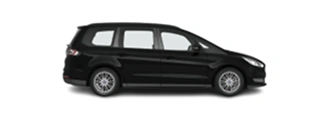
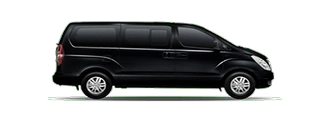
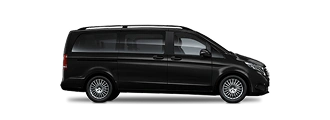
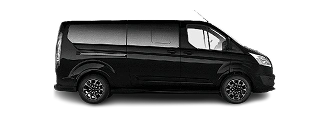
For three children needing seats, or for any family combination that includes a travel system pushchair (baby stroller with car seat) plus two or more children's seats plus luggage, the MPV (6 passengers) is the right vehicle. MPVs have a significantly wider rear bench and a larger boot. For very large families — five or more children, or families with multiple pushchairs — the minibus option (up to 8 passengers) is available. Every extra child seat on any vehicle is free. Specify everything at booking and the vehicle is confirmed accordingly.
Hygiene — why it matters and what actually happens
A baby car seat that is used by multiple families without being cleaned between uses is a hygiene risk that matters most for newborns and very young babies whose skin is in direct contact with the seat fabric and whose immune systems are not yet fully developed. This is not a trivial concern — bacteria and allergens on unclean fabric seat surfaces can cause reactions in young infants, and the risk is highest for babies under 3 months.
Gatwick Taxi Transfer sanitises all child seats after every single booking. The fabric surfaces are cleaned and dried before the next use. This is not standard practice across the taxi industry. Many drivers carry a single seat in the boot that gets passed between families and cleaned when it looks dirty rather than after each use. If hygiene matters to you for your baby — and for newborns it should matter a great deal — ask any provider directly: "When was this seat last cleaned and how?" If they cannot answer specifically, that is information.
Comparing London Taxi Providers on Baby Car Seats — What Free Actually Means
The word "free" in baby car seat taxi advertising is used loosely. Some providers mean free in the literal sense — the seat is included in the fare and nothing extra appears at checkout or on the day. Other providers mean "no upfront charge" but add a seat fee at the payment page. A handful charge the seat as an add-on and simply do not mention it in the headline. Here is an honest breakdown of what the main providers in London actually offer.
- ✓ Baby car seat completely free — any age
- ✓ Extra seats for siblings — also free
- ✓ Pre-installed before driver departs
- ✓ Sanitised after every single booking
- ✓ Confirmed at booking — not on-the-day hope
- ✓ All 6 London airports covered
- ✓ TfL PCO licensed operator
- ✓ Meet and greet in arrivals hall
- ✓ 1 hour free waiting from actual landing
- ✗ £18 for child seat (0–4 years)
- ✗ £6 for booster seat (4+ years)
- ✗ Two children = £24 extra minimum
- ✓ Large fleet (150+ seats)
- ✓ Airport satellite storage hubs
- ✗ London city + 1–2 airports only
- ✓ LTPH licensed
- ~ Some free, some add £5–15 at checkout
- ✗ Seat often driver-dependent, not confirmed
- ✗ Not pre-installed — assembled at the kerb
- ✗ Hygiene practices rarely disclosed
- ✗ Usually 1–3 airports only
- ~ Licence type and quality varies widely
- ✗ No arrivals hall meet and greet standard
- 1Is the baby car seat genuinely free? Do not just read the headline — check the booking total page. Some providers advertise free baby seats but add a seat charge as an optional extra at checkout. The test is what appears on the final payment screen before you confirm.
- 2Is it pre-installed before the driver arrives at the terminal? A seat stored in the boot that gets assembled at the kerb while you stand outside at midnight with a baby is very different from a seat fitted before the driver leaves for the airport. Ask: "Is the seat already in the vehicle when the driver arrives to collect me?" With Gatwick Taxi Transfer, yes.
- 3Is it the correct type for your child's exact age? "We have a baby seat" covers seats from birth to 4 years — a very wide range with very different requirements. A 3-week-old newborn needs a rear-facing infant seat with head support. A 20-month-old needs a forward-facing toddler harness seat. A 7-year-old needs a high-backed booster. Specify your child's age in months and ask which exact seat type will be provided.
- 4Is it confirmed for your specific booking? "We try to have seats available" is not a confirmation. The seat should be assigned to your booking at the time of booking — not dispatched based on driver availability or vehicle allocation on the day. Ask: "Is the child seat confirmed on my booking right now?"
- 5Are extra seats for siblings free? If you have two children needing different seats, confirm both are included in the price. Some providers include one seat and charge for additional seats. With Gatwick Taxi Transfer, every seat for every child is free regardless of how many children are travelling.
- 6When was the seat last cleaned? For newborns and babies under 3 months, hygiene on seat fabric matters. Ask directly: "How often are your child seats cleaned between families?" If the answer is vague or the provider cannot answer specifically, that tells you something important about how the seat is managed.
- 7Does the driver meet you inside the arrivals hall? For families with babies, meet and greet inside the terminal — not kerbside and not at a car park — is the practical difference between a manageable arrival and a difficult one. Confirm: "Does the driver come through to arrivals with a name board?" With Gatwick Taxi Transfer, always.
Depends on the provider. With Gatwick Taxi Transfer — yes, completely free for every airport transfer, every age. Carrot Cars charges £18 for a child seat plus £6 for a booster. Always check the booking total before confirming — "free baby seat" in a headline does not always mean free at the payment stage.
UK taxis have a legal exemption for on-demand journeys when no seat is available — children under 3 may travel in the rear without one. For pre-booked transfers where a car seat is specifically requested, the operator must provide it. Pre-book with a seat request = seat guaranteed. Source: gov.uk/child-car-seats-the-rules.
NHS guidance: maximum 30 minutes for newborns and babies under 6 months. How long can a baby stay in a car seat for babies 6–12 months: up to 90 minutes, with a break after. How long should a baby be in a car seat on long journeys: take the baby out and let them lie flat every 30–90 minutes. Most London airport transfers (20–75 min) fall within safe limits for babies over 6 months.
Not before 15 months under i-Size (R129) standard. When can a baby face forward in a car seat UK beyond 15 months: only when the rear-facing seat's own weight or height limit is genuinely reached — not based on age alone. Rear-facing is approximately 5 times safer in frontal crashes. Many safety experts recommend rear-facing to age 3–4 if the seat allows.
ISOFIX is a click-in anchor system — like a plug into a socket. An isofix baby car seat or baby car seat with isofix connects directly to metal anchor points in the car's frame rather than relying on seatbelt routing. Baby car seat isofix cannot shift around in a crash. Most modern saloons and all MPVs have ISOFIX rear points. Gatwick Taxi Transfer uses ISOFIX where available.
The best baby car seat UK for a taxi is the one correctly fitted for your child right now, meeting i-Size R129 or ECE R44, in clean condition. For infants: Joie i-Gemm, Cybex Cloud T, Maxi Cosi CabrioFix. For toddlers: Joie Every Stage, Cybex Sirona S2. The safest baby car seat is always the one installed correctly — brand is secondary to correct fit and installation.
Yes, with conditions. Can you put a baby seat in the front of a car UK: a forward-facing child seat may go in the front with no extra requirements. A rear-facing baby car seat in the front requires the passenger airbag to be completely switched off first — an airbag firing into the back of a rear-facing seat can cause serious injury. Gatwick Taxi Transfer always uses rear seats for all child seats.
Specify your child's age in months when booking — the provider selects the right seat. How to choose baby car seat: match age and weight to the correct category. Confirm the seat meets ECE R44/04 or i-Size R129. Confirm it is pre-installed, cleaned between uses, and confirmed for your specific booking — not "subject to driver availability." With Gatwick Taxi Transfer, all of this is handled automatically.
Book a London Airport Taxi with Free Baby Car Seat — 60 Seconds, Confirmed Instantly
Go to gatwicktaxitransfer.com. Choose your airport — Heathrow, Gatwick, Stansted, Luton, London City or Southend. Enter your collection or drop-off address. In the booking notes field, add your child's age: "8-month-old" or "toddler 2 years plus booster for 6-year-old" if you have two. The correct seat type is confirmed in your booking confirmation. Nothing extra appears at checkout. The booking takes about 60 seconds.
If you are unsure about vehicle size, seat type or any other detail — WhatsApp or call before booking. We can confirm the right vehicle, the correct seat combination for your specific children, and any other detail before you pay a penny.
- checkFree baby car seat — all ages, no charge: newborn baby car seat (0–15 months) · toddler seat (15m–4yr) · high-backed booster (4–12yr). Extra seats for siblings free. Unlike Carrot Cars (£18 + £6), Gatwick Taxi Transfer charges nothing extra for any seat.
- checkPre-installed, confirmed and sanitised: seat type confirmed at booking. Fitted before the driver leaves for the airport. Cleaned after every single booking. Not stored in a boot and assembled at the kerb.
- checkUK law accurately stated: on-demand taxis have a legal exemption for children under 3 when no seat is available. Pre-booked transfers with a seat request = provider must supply it. Baby in taxi without car seat UK: only legal on-demand, not for pre-booked family bookings. Source: gov.uk.
- checkNHS timing guidance: how long can a baby be in a car seat — max 30 min for newborns, 90 min for babies 6–12 months, 2hr+ for toddlers. Most London airport transfers within safe limits. Longer journeys: driver stops on request.
- checkWhen can a baby face forward in a car seat UK: not before 15 months. i-Size R129 standard. Move forward-facing only when the rear-facing seat's own weight or height limit is reached. Rear-facing is approximately 5x safer in frontal crashes.
- checkAll 6 London airports: Heathrow (T2, T3, T4, T5) · Gatwick (North and South Terminal) · Stansted · Luton · London City · Southend. Meet and greet inside arrivals hall with name board. 1 hour free waiting from actual landing time. Flight tracked automatically.
- checkGatwick Taxi Transfer — TfL PCO licensed: all drivers DBS checked. 4.8/5 on Trustpilot (40 reviews). Book at gatwicktaxitransfer.com or call 020 3617 7825. Available 24/7.
Gatwick Taxi Transfer — Free Baby Car Seat, All 6 London Airports
Free infant seat, toddler seat or booster. Pre-installed before pickup. Meet and greet inside arrivals. 1 hour free waiting. TfL PCO licensed. Sanitised after every use. 24/7 — including midnight newborn arrivals.