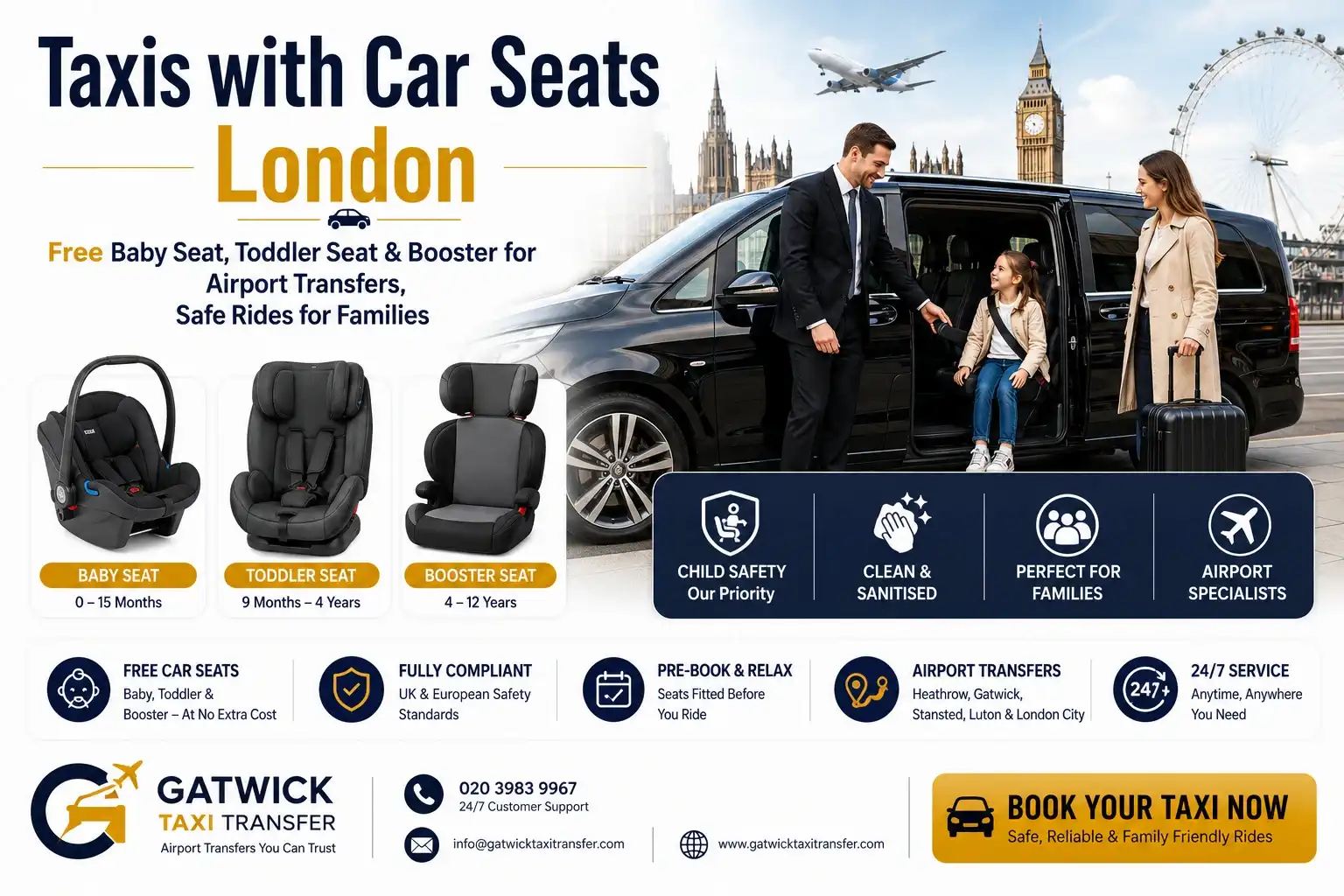
Can I book a London taxi with a baby seat? Yes. Request the child seat when you book and include the child's age. Gatwick Taxi Transfer currently offers infant, toddler and booster-seat options for pre-booked family airport transfers.
Is the child seat free? Under our current booking policy, the requested baby, toddler or booster seat is supplied with no separate child-seat fee. Your journey fare is still based on the route and vehicle required.
Which airports are covered? Heathrow, Gatwick, Stansted, Luton, London City and Southend. The same booking process applies whether your family is travelling to the airport or being collected after a flight.
What information should I provide? Tell us each child's age, total passengers, large cases, cabin bags and whether you are carrying a pushchair or travel system. This is important because luggage space can determine whether a saloon, estate, MPV or larger vehicle is appropriate.
Book a London Taxi with a Child Seat Included
Tell us the route, each child's age and your luggage or pushchair requirements. We can then confirm the requested seat and the vehicle size before travel.
What You Get When You Pre-Book a Taxi with a Car Seat in London
A parent searching for a taxi with car seat London usually needs certainty rather than another general baby-seat article. You need to know that the requested seat has been recorded, that the vehicle has enough room for the family and luggage, and that the booking will still work after a delayed flight or a late-night arrival. That is the purpose of this service.
Gatwick Taxi Transfer provides pre-booked private hire journeys for families travelling across London and to the major London airports. Child-seat requests are added to the booking in advance. Instead of turning up at a taxi rank and hoping the right restraint is available, you give us the child's age before travel and the requested seat is matched to the booking.
- 1Seat request recorded: infant, toddler or booster requirement added before the journey.
- 2Vehicle sized for the whole booking: passengers, car seats, suitcases, cabin bags and pushchair considered together.
- 3Airport journey planned: pickup details, flight information and terminal are used for airport collections and drop-offs.
- 4One confirmed fare: your transfer quote is agreed at booking; the child-seat request does not carry a separate seat fee under the current GTT policy.
Baby, Toddler and Booster Seats — Which One Should You Request?
The safest approach is not to guess from a generic age label. When booking a London taxi with a baby seat, give the child's age and, if you know it, approximate height or weight. The correct restraint depends on the child and the seat's approved limits. GOV.UK says children must normally use a child car seat until they are 12 years old or 135cm tall, whichever comes first.
Baby in a Taxi Without a Car Seat in the UK — What the Law Actually Says
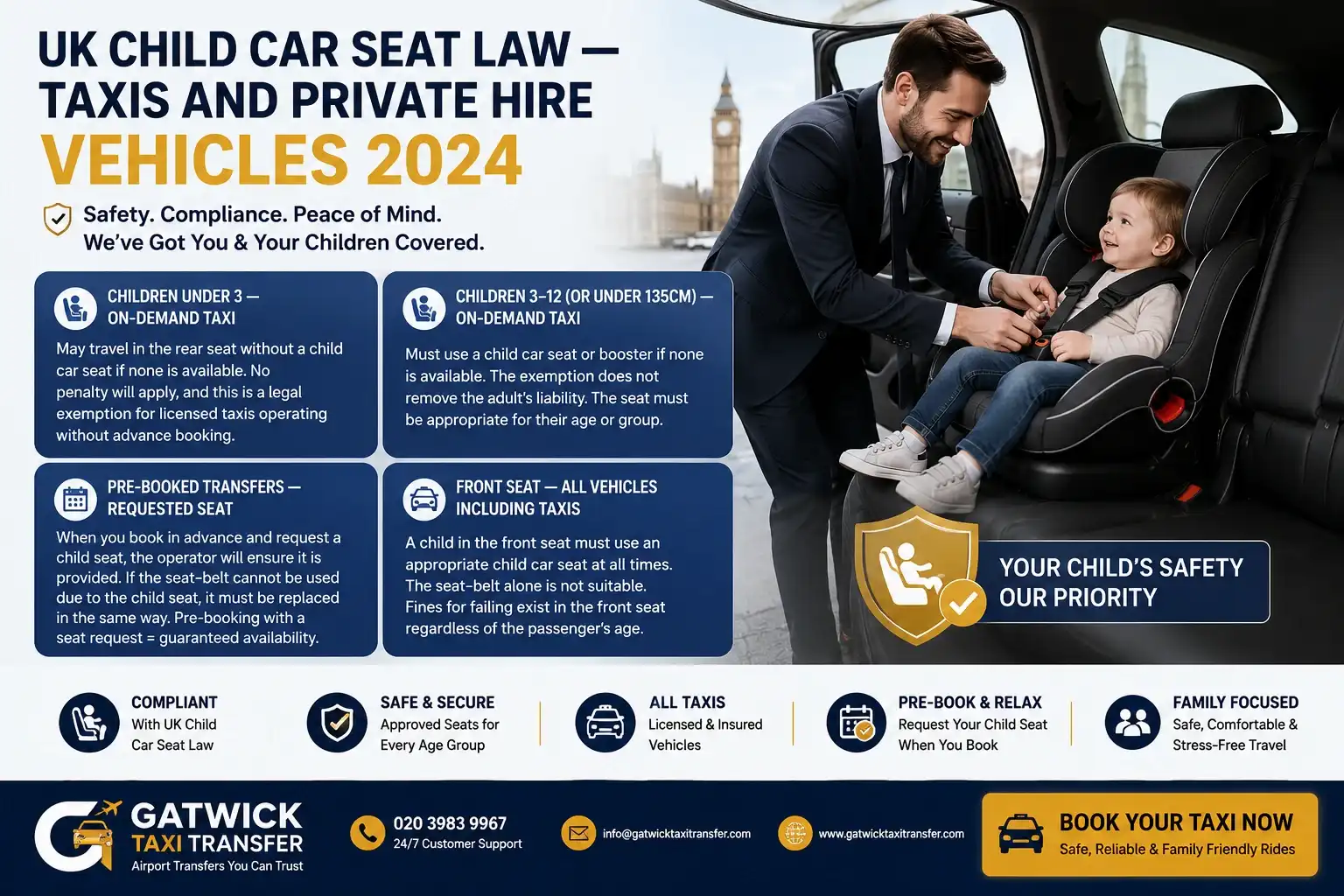
UK taxi law is often simplified too aggressively online. The official rule is clear: if a taxi or minicab driver does not provide the correct child car seat, a child may travel without one only on a rear seat. A child aged 3 or over must wear an adult seat belt; a child under 3 may travel on the rear seat without a seat belt. You can read the official rule on GOV.UK child car seat guidance.
That legal exemption is separate from Gatwick Taxi Transfer's service policy. When you pre-book with us and request a child seat, our aim is to have that requested seat confirmed as part of the booking so your family does not need to rely on the taxi exemption.
When can a baby face forward in a car seat in the UK?
For height-based R129 seats, GOV.UK says the seat must remain rear-facing until the child is over 15 months old. After that, whether a child should move to a different seat still depends on the approved height or weight limits of the restraint. Rear-facing seats provide better support for a young child's head, neck and spine, so do not switch simply because a birthday has been reached.
What about ISOFIX?
ISOFIX is a vehicle anchoring system designed to make compatible child-seat installation more straightforward. Some child seats use ISOFIX, while others are approved for seatbelt installation. If ISOFIX is important for your own seat or base, mention it before booking so vehicle compatibility can be checked.
London Airport Taxi with Baby Seat — Heathrow, Gatwick, Stansted, Luton, London City and Southend
The same child-seat booking process is available across the six airports covered by Gatwick Taxi Transfer. For arrivals, include the flight number and terminal details with the booking. For departures, allow enough time for family loading, pushchairs and terminal drop-off.
- Terminals 2, 3, 4 and 5
- Baby, child or booster request
- Family luggage planning
- North & South Terminal
- Arrivals and departures
- Pushchair space considered
- Pre-booked child seat
- Late-night family arrivals
- Flight details recorded
- Infant to booster requests
- Vehicle chosen for luggage
- 24/7 pre-booking
- London family transfers
- Child-seat request in advance
- Door-to-door journey
- Longer London-area journeys
- Seat and vehicle confirmed together
- Family-friendly pre-booking
The Detail Many Taxi-with-Car-Seat Pages Miss: Will the Pushchair and Cases Fit?
For family airport transfers, passenger count alone does not determine the right vehicle. A rear-facing child seat can affect cabin space, while a travel system or folded pushchair may take a large part of the boot. Add two large suitcases, cabin bags and another child seat and a normal saloon can quickly become the wrong choice.
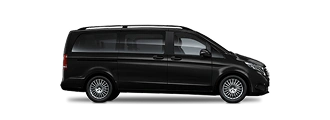
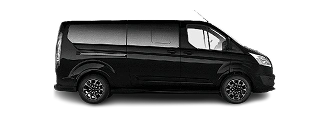
When requesting a child seat taxi in London, send the complete family load: number of adults, number and ages of children, large cases, cabin bags, pushchair or buggy, and any oversized items. This helps the booking team decide whether a saloon, estate, MPV or larger family vehicle is more suitable.
| Booking detail | Why it matters | What to send us |
|---|---|---|
| Child-seat count | Seats use cabin width and can affect adult seating | Each child's age |
| Pushchair / buggy | Folded size can use substantial boot space | Whether you are bringing one |
| Suitcases | Family airport luggage often exceeds saloon capacity | Large cases + cabin bags |
| Own car seat/base | Compatibility and storage need checking | Seat/base type if relevant |
| Return journey | Same family requirements should be recorded both ways | Confirm seats on both legs |
How to Book a Taxi with a Baby or Child Seat in London
- 1Enter your pickup and destination. For airport arrivals, include the flight details requested during booking.
- 2Tell us each child's age. If you have two or more children, list every age separately so the requested seat combination is clear.
- 3Add luggage and pushchair information. This is how the correct family vehicle is selected, not just by passenger count.
- 4Check your confirmation. Make sure the child-seat requirement and journey details match what you requested before travel.
If you are unsure which vehicle or seat combination to request, call 020 3617 7825 or use WhatsApp before booking. A short conversation about two child seats, a travel system and luggage is better than discovering at pickup that the vehicle is too small.
What to Check Before Booking Any Taxi with a Child Seat in London
Not every “baby-seat taxi” offer means the same thing. Some companies include the seat, some charge separately, and some treat it as subject to driver availability. Before paying, check the service details that affect the actual family journey.
| Question to ask | Why it matters | GTT approach |
|---|---|---|
| Is the seat confirmed for this booking? | Avoids relying on last-minute availability | Requested and confirmed in advance |
| Is there a separate child-seat fee? | Can change the real journey cost | No separate child-seat charge under current policy |
| Do you need the child's age? | Helps match the requested restraint | Yes — provide each child's age |
| Is luggage and pushchair space checked? | Determines the correct vehicle size | Yes — include full luggage details |
| Can I bring my own seat? | Some families prefer their own restraint/base | Tell us before booking so compatibility can be checked |
Travelling with a Young Baby on a Longer Airport Transfer
Car seats are designed for safe travel, not as a long-term sleeping space. For very young or premature babies, avoid unnecessarily long journeys where possible. On a longer transfer, take regular breaks, keep an eye on the baby's position and stop if the baby slumps forward. At the destination, remove the baby from the car seat rather than leaving them sleeping in it.
If your baby has specific medical, developmental or respiratory needs, follow the advice of your health professional and the child-seat manufacturer's instructions. For booking purposes, tell us in advance if you expect to need a comfort or feeding stop so the journey can be planned realistically.
Yes. Pre-book a private hire vehicle and request the child seat before travel. With Gatwick Taxi Transfer, tell us each child's age so the requested infant, toddler or booster seat can be added to the booking.
Under the current GTT booking policy, baby, toddler and booster seats are supplied without a separate child-seat charge. Your normal transfer fare still depends on the route and vehicle required.
Not in every taxi or minicab journey. GOV.UK provides an exemption when the driver does not provide the correct child seat, but the child must travel in the rear and age-specific seat-belt rules apply. Pre-booking a requested seat avoids relying on that exemption.
Give the age of every child and, if known, approximate height or weight. Also provide the number of passengers, suitcases, cabin bags and pushchairs so the requested seats and vehicle can be planned together.
Yes, subject to the vehicle being suitable for the whole family and luggage. Mention both children's ages and the full luggage load before the vehicle is allocated.
Gatwick Taxi Transfer publishes child-seat availability for Heathrow, Gatwick, Stansted, Luton, London City and Southend airport transfers.
Ready to Book Your Family Airport Transfer?
Send the route, each child's age, passenger count, luggage and pushchair details. The booking team can confirm the requested child-seat setup and vehicle before travel.